Email Us info@fiberstar.net
Call Us +1 (715) 425-7550
Citri-Fi Citrus Fiber Water Holding, Natural Emulsifier, Upcycled, Sustainable, Gelling Properties - Sustainability - Eco-friendly - Upcycled

6 Ways to Formulating with Citrus Fiber

Foods tend to require multiple ingredients to ensure stability and quality. Yet, the lengthy ingredient labels tend to hamper the product’s image. Fiberstar’s full line of citrus fibers offer one ingredient with multiple functionalities – water holding and emulsification. By formulating with citrus fiber, product developers can create high quality and stable food products while keeping labels clean.

Look at a food product’s label and you will be daunted at how many food ingredients are listed. Some are your classics found in grandmother’s pantry. Others struggle to roll off the tongue easily. And then some ingredients read like hieroglyphics dug up from an Egyptian crypt. Regardless, formulating with citrus fiber and/or other natural functional ingredients can help clean up food labels which improves the product’s image.

The market demands more natural ingredients that create high quality healthy food products with a long shelf-life. Using the words ‘natural ingredients’ and ‘long shelf-life’ in the same sentence is an oxymoron to most food developers. Natural ingredients tend to have limited functionality and stability which adversely affects shelf-life. Many shelf stable foods need stabilizers and/or emulsifiers to maintain its integrity. At the same time, not all fall in the clean label bucket.

Texturizers, Stabilizers and Emulsifiers

Hydrocolloids originate from various raw materials, require different handling and usage methods and provide varying functionalities. Some hydrocolloids provide stabilization, suspension and even emulsification. They exist as the workhorses in the food formulating world. However, depending on the hydrocolloid used, these ingredients pose challenges. Some have fallen out of favor with consumers due to the clean label trend. Others continue to have availability issues. However, formulating with citrus fiber has bypassed some of these hurdles.

However, not all citrus fibers are created equal. These fibers differ by raw material origin, processing methods, composition, functionality and particle size in addition to regulatory certifications. For instance, Citri-Fi® citrus fiber is produced from byproduct of the citrus juicing industry. This upcycled product uses processes free from chemical modifications. Because of the patented process, the citrus fiber exists in its natural form like Mother Nature intended. The composition of insoluble and soluble fiber, in the form of high levels of intact pectin, contribute to its functional benefits – water holding and emulsification. Moreover, the small protein content also aids in the emulsification mechanism making citrus fiber an ideal natural emulsifier.

As mentioned, citrus fibers also differ by particle size. Fiberstar offers varying particles sizes that range from fine to large coarse granules. The procurement and process allows Citri-Fi to be allergen-free, non-GMO and in some product lines, USDA certified organic.

Because Citri-Fi has a portfolio of products, how does one choose the right citrus fiber? Let’s discuss the basics.

Formulating with Citrus Fiber 100 Series

The Citri-Fi 100 product line, the flagship brand, provides water holding and emulsification properties. It is recommended to use less than 1% to minimize any flavor impact. Depending on the flavor sensitivity of the food application, Citri-Fi 100 series can be used at a slightly higher level to maximize the functional benefits.

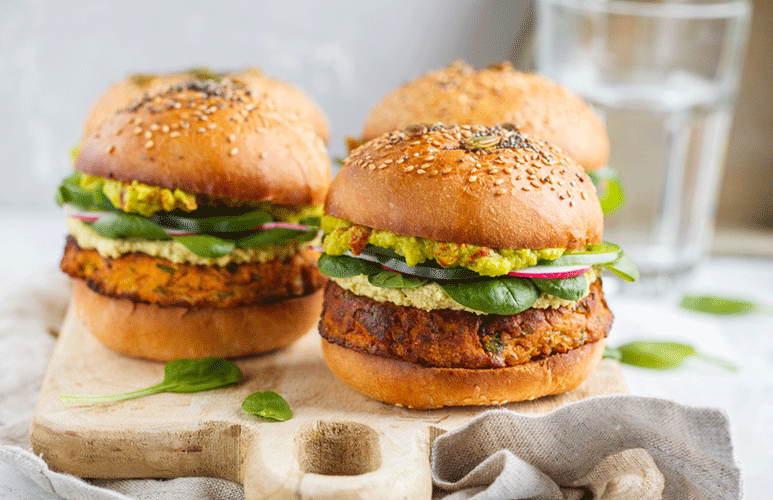
Food applications include baked goods, dairy, beverages, processed meats, dressings, sauces, pet food, meat substitutes and dairy alternatives. Using homogenization opens the fiber up to create high surface area which increases the functionality of the citrus fiber. This can be useful in food applications such as dairy products, ice cream, dressings and sauces. For example, the sheared citrus fiber can serve as a tomato extender in tomato paste which is used in pizza sauce and tomato juice. There are four particle sizes available ranging from small to large.

Co-processed Citrus Fiber and Food Gums: Citri-Fi 200 and 300 Series

Fiberstar also offers the Citri-Fi 200 and Citri-Fi 300 series. Both of these series are co-processed with food gums, guar gum and xanthan gum, respectively. The co-processed citrus fibers provide similar water holding and emulsification as the 100 line, however, they provide additional viscosity. Both are ideal for applications requiring additional viscosity and/or functionality such as dairy products, dressings, sauces and egg and/or oil replacement in baked goods. Deciding which line to use depends on the formulation criteria. Some product developers prefer working with guar gum vs. xanthan gum or vice versa due to functionality, labeling or availability. Again, these lines are offered in various particle sizes to target specific food textures.

The Next Level of Functionality Citrus Fiber: Citri-Fi 600 Series

Now the portfolio includes the new Citri-Fi 600 citrus fiber series. Though Fiberstar offers the 200 and 300 lines to provide additional viscosity, some customers prefer not to use foods gums on their ingredient labels. And in some cases, using shear to open the fiber up to increase the viscosity is not an option. However, they still need the additional thickness. This neutral flavored Citri-Fi 600 line provides the additional viscosity without requiring shear. The viscous nature is found naturally which makes it ideal for those food manufacturers who do not have shearing equipment like a homogenizer.

Citri-Fi 600 performs well in food products such as dairy, dressings, beverages and sauces. For instance, the 600 line is also an ideal tomato paste extender. As a result, this citrus fiber can extend up to 25% tomato paste while creating a natural tomato-like texture. And due to the water and oil binding, Citri-Fi controls separation during food processing and shelf life. Citri-Fi 600 is heat, low pH and freeze/thaw stable.

USDA Certified Organic Citrus Fiber: Citri-Fi 400 Series

Due to the growing demand for more organic foods and beverages, formulating with citrus fiber that is organic is now an option. Fiberstar launched Citri-Fi 400 USDA certified organic citrus fiber. This neutral flavored organic line has the same functionality as the Citri-Fi 600 series – water holding, emulsification and added viscosity. Product developers can use the 400 series to create foods that are 100% organic, 95% organic or made with organic ingredients.

Plant-based Food Texturizers: Citri-Fi TX

The Citri-Fi TX texturizing citrus fiber was specifically designed to create meat-like texture in meat substitutes and processed meats. In plant-based meats, formulators typically use texturized plant proteins as the base to produce the meat-like texture. When formulating with citrus fiber, Citri-Fi TX enhances the texture of the meat substitute by delivering the firmness, bite and meaty texture at 2-4%. The TX is used in combination with plant-based proteins. And when combined with the 100 line, this citrus fiber binds the water and oil to produce the juiciness and succulence.

Checking all the Good Boxes

Labeling options for the Citri-Fi 100, 400, 600 and TX include citrus fiber, dried citrus pulp or citrus flour which resonate well in the natural markets. These lines are non-GMO, allergen-free and gluten-free and contribute dietary fiber. Also, they have no e-number which is desirable in regions like Europe. As mentioned, the Citri-Fi 400 is USDA certified organic. And because Citri-Fi originates from byproduct of the citrus juicing industry, these product lines are plant-based and highly sustainable. Citri-Fi meets today’s hottest food trends – plant-based, organic, natural, sustainable, green, upcycled, healthy and allergen-free. Formulating with citrus fiber checks all the boxes.

Using one ingredient - citrus fiber - alleviates the clean label issue. Product developers can create clean great tasting food and beverages with one multi-functional ingredient. Fiberstar continues to leverage its long-standing citrus fiber expertise to create new clean food ingredients that solve the market’s challenges today.

Please contact us if you have questions about the Citri-Fi citrus fiber portfolio.
 

Read more →

Bakery Fillings - Citri-Fi Citrus Fiber Thickener, Stability, Creamy Texture, Egg Reduction, Clean Label

Perfecting the Pumpkin Pie Filling – Citrus Fiber

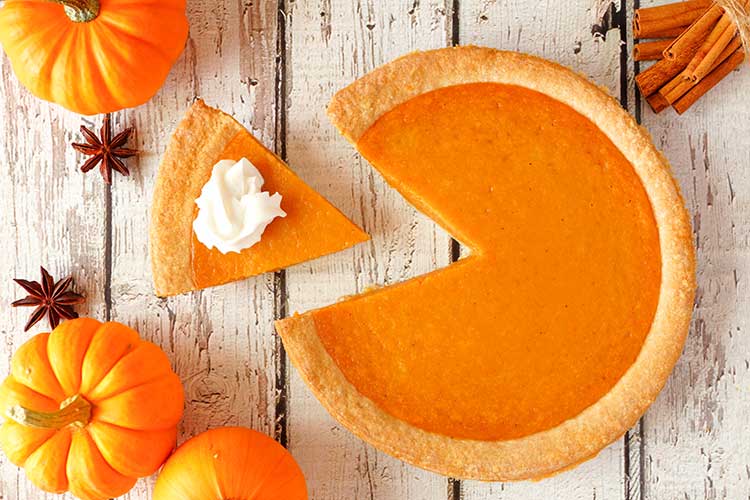
Pumpkin spice takes center stage when the Fall season hits. Though used in a variety of foods, the spice blend originated from the pumpkin pie which is a staple during the holiday season in the U.S. However, commercial pumpkin pies fall victim to stability and texture issues due to water migration over time. One option is to use the new Citri-Fi® 600 citrus fiber, a neutral flavored citrus fiber which provides water holding, emulsification and viscosity. As a result, when used at low usage levels (<1%) in pumpkin pie filling, this natural ingredient minimizes cracking, shrinking and weeping.

Tis the season when baristas whip up frothy pumpkin spice lattes and shoppers restock their pantries with pumpkin spice everything. Over the years, pumpkin spice penetrated almost every food group including beer, cookies, candy and even butters. This flavor trend evolved into a tradition which marks the dawn of a new season. Despite pumpkin spice’s trendiness, its popularity originated in the traditional pumpkin pie filling.

Pumpkin Pie Filling Pitfalls

As soon as Fall arrives in the U.S., every baker is pumping out fresh pumpkin pies. And like most shelf-stable foods, pies fall victim of stability issues. Over time, water migration causes water to pool on the surface. As a result, the pie tends to form cracks. And with enough water movement, shrinking causes the edges to pull away and the loose moisture turns the crust soggy. These unalluring visuals could sway any customers to alternatives like apple pie.

Most pumpkin pies rely on egg to bind the water and oil which minimizes the weeping. However, depending on the pie formulation, egg alone cannot prevent water migration. And because of egg availability issues and price fluctuations, some producers try to reduce the egg content as a cost savings strategy. This further reduces the egg functionality causing water binding issues. Some workarounds include applying a gel-based surface coating containing different hydrocolloids to mask the weeping and prevent cracking. However, this technique does not address the soggy crust. Another option is to add water binding ingredients such as modified starches, alginates or food gums to the filling.

Egg Reduction & Clean Label

Another solution is to incorporate citrus fiber. The new Citri-Fi 600 citrus fiber line is recommended for bakery fillings such as pumpkin pie filling. At low usage levels (<1%), this neutral flavored citrus fiber provides high water holding and emulsification properties in addition to high viscosity. Because of this, water is bound to prevent the cracking, shrinking and weeping. Moreover, Citri-Fi can also improve the stability and texture of the pie when eggs are reduced. For instance, bakers can reduce eggs up to at least 50% when using 1% of Citri-Fi 600 citrus fiber.

Citri-Fi is easily incorporated into the pie formulation by mixing it with the dry ingredients such as spices, salt or sugar. This step is key before introducing the liquids such as pumpkin, milk and water. The dry ingredient mix is then added to the wet ingredients to create a uniform mixture.

Using Citri-Fi 600 not only improves the overall quality of the pumpkin pie but it also can help reduce the number of ingredients in the pie formulation. As a result, bakers benefit from cleaner and more natural food labels. Citri-Fi 600’s labeling options include citrus fiber, dried citrus pulp or citrus flour which resonate well in the natural food markets.

Other Bakery Filling Benefits using Citrus Fiber

Besides heat stability, Citri-Fi 600 is also freeze/thaw and low pH stable. It is non-GMO Project certified, allergen-free and gluten-free. Citri-Fi 600 also has no e-number which is key for certain regions like Europe. An USDA certified organic version, Citri-Fi 700, will be launching soon.

For more information about Citri-Fi 600 citrus fiber in pumpkin pie filling or other bakery fillings, please contact us.

Read more →

Dry Plating: Citri-Fi Citrus Fiber Turns Liquids into Free-Flowing Powders - Beverages

Plating Agent: Citrus Fiber Nature’s Dry Carrier

Some food ingredients come in both oil-soluble and water-soluble states such as flavors and nutritional fortifiers. Formulating with these aqueous food ingredients can be challenging. Because of this, many prefer to use dry carriers. To do this, plating agents like Citri-Fi® citrus fiber can transform liquid substances into flowable powders by dry blending. Once combined, the plated citrus fiber can be added to beverages, soups, sauces and dressings. At less than 1% usage, Citri-Fi not only delivers flavor, but also texture, stability and nutrition.

In previous articles, Fiberstar touted how Citri-Fi citrus fiber converted liquids into flowable powders. Though it sounds like a form of wizardry, this citrus fiber’s high surface area lends itself to this magical act. And when stacked up against other plating agents on the market such as maltodextrin, food starches and silicates, many prefer citrus fiber due to its clean label status.

Plating Agent Magic: Citrus Fiber

Citri-Fi is an upcycled citrus fiber produced from byproduct of the citrus juicing industry. The process, which is free from chemical modifications, opens up the fiber to create high surface area. As a result, when mixed with Citri-Fi, liquids become trapped in the fibrous matrix transforming its liquid state into a dry free-flowing powder. These liquids are not restricted to just oil-based solutions as mentioned in previous articles. Citri-Fi can turn other aqueous solutions such as water-based or oil and water-based solutions into flowable powders.

Besides serving as a delivery system, the Citri-Fi also provides additional functionality depending on the food application. In beverages, the plated citrus fiber creates a natural mouthfeel, body and stability when hydrated. This dry carrier also improves yields and juiciness in processed meats like pumped poultry or chicken. Other applications include plating medicinal oils like CBD.

Oil-Soluble Liquid to Dry Powder Beverage Example: Lemon Oil

Many flavors and nutritional fortifiers start life as a liquid oil. Citri-Fi citrus fiber can plate up to 20% liquid oil while maintaining flowability. In this this example, lemon oil is plated onto Citri-Fi 100M40 citrus fiber to create an oil powder. To do this, dry blend 20% lemon oil onto a solid carrier such as citrus fiber in a vessel. If used in a beverage, about 0.25% of the citrus fiber plated with lemon oil is blended with other dry ingredients such as sugar before mixing into water or other liquids.

Water-Soluble Liquid to Dry Powder Example: Liquid Smoke

Some water-based flavors such as liquid smoke can be plated onto citrus fiber. In this application, Citri-Fi can bind up to 1:1 water-soluble ingredients and remain a free-flowing powder. To do this, pour water-soluble liquid smoke into a vessel containing Citri-Fi citrus fiber while mixing. Mix until a homogenous powder forms. Once dry blended, the plated liquid smoke can be used in dry mixes like dressings, sauces and soups.

Oil and Water-Soluble Liquid to Dry Powder Example: Liquid Smoke

In some cases, the flavoring system is a combination of oil and water like for some smoke flavor blends. The plating agent, Citri-Fi 100M40, can bind up to 20% of both water-soluble and oil-soluble ingredients while maintaining a free-flowing powder. To do this, place the Citri-Fi into a mixing vessel. While mixing, pour the water-soluble smoke flavor first. Mix until homogenous. Next add the oil-soluble smoke flavor and mix until homogenous. Oil-soluble ingredients can be also mixed with citrus fiber first without a noticeable difference.

Other Citrus Fiber Benefits

In the end, plating agents like citrus fiber can convert oil-soluble or water-soluble materials into flowing powders. The plated citrus fiber delivers the flavor to food products when used at less than 1%. In addition to delivering flavor, Citri-Fi also provides additional functionality such as improved texture, stability and nutrition.

Citri-Fi citrus fiber is non-GMO Project Certified, allergen-free and gluten-free. USDA certified organic is now available – Citri-Fi 400 citrus fiber series. Labeling options include citrus fiber, dried citrus pulp or citrus flour which resonate well in the clean label market. This citrus fiber does not have an E-number.

For more information, please contact us at techsupport@fiberstar.net.

Read more →

Bakery Citri-Fi Citrus Fiber Moisture Retention, Freshness, Gluten-free, Water Binding, Stability

Gluten-free Ingredients: Next Generation Challenges & Solutions

Gluten-free bakery products continue to be in demand. Though first generation baked goods had superior taste and texture, they lacked nutritional enhancement. As a result, newer versions used new gluten-free ingredients such as plant-based proteins, enzymes, nutritional oils and fibers. Because of this, formulators managed new sets of challenges. Citri-Fi® citrus fiber is a multi-functional ingredient ideal for gluten-free formulating. This natural ingredients binds oil and water which provides moisture retention, binding, improved freshness, emulsification and freeze/thaw stability in a variety of baked goods.

Back in 2005 during my R&D days, gluten-free bakery became the next new hot wave for food formulators. Working in R&D meant you joined sensory panel evaluations or bakery cuttings. And at that time, my bakery team produced never ending rounds of gluten-free breads using a cocktail of starches, gums and gluten-free flours. The polarizing results teetered between a mouth full of sawdust to teeth encased with gummy dough. As a result, formulating with gluten-free ingredients reverted my bakery team to ground zero.

At that time, the goal was to create a gluten-free food that was edible and tasted good. That meant using gluten-free ingredients not typically found in a baker’s toolbox. However, over time, bakers churned out high quality acceptable gluten-free bakery products. Yet, today, gluten-free still faces a few challenges including lack of nutrition. Because formulators primarily focused on taste and texture, they used gluten-free ingredients consisting of lower amounts of vitamins, minerals, protein and fiber versus their gluten-containing counterparts. For instance, first generation formulations contained starches and food gums minus the fortification. Though the market found safe products to eat, they lacked the nutritious and wholesome diet.

However, today, the gluten-free category continues to thrive. Besides Celiac’s disease, gluten and wheat intolerances and allergies, other trendy diets such as paleo, keto and FODMAP spurred further demand for gluten-free products. At the same time, formulating evolved into a more sophisticated task. The toolbox expanded to equip formulators with a variety of plant-based proteins, enzymes, nutritional oils, fibers and formulating techniques. The revised ingredient toolbox and trendy diet fads also created new formulating challenges. Product developers ran into issues with binding, emulsification, moisture retention, crumb formation and structure. Yet, despite the nuisances, there is one gluten-free ingredient formulators needed to add to their gluten-free toolbox – citrus fiber.

Next Generation Gluten-free Ingredients

Citrus fiber, such as Citri-Fi, serves as an ideal functional fiber used in gluten-free formulating. However, not all citrus fibers are created the same. Some citrus fiber suppliers pull byproduct from their pectin extraction processes which at times limits their functionality due to their composition. On the other hand, citrus fibers like Citri-Fi, are upcycled materials created from byproduct of the citrus juicing process. As a result, this citrus fiber’s composition does not change. It remains how nature intended it to be. Citri-Fi consists of insoluble and soluble fiber in the form of pectin. The high concentration of intact native pectin gives this citrus fiber the multi-functionality which is key in gluten-free formulating.

Citrus Fiber's Multi-functionality at Work

Many gluten-free bakery formulations use ingredients that do not provide much viscosity. A popular work around is to use food gums or pregel starches. However, due to Citri-Fi citrus fiber’s fibrous composition, it contributes thickness when hydrated. As a result, this helps thicken up the dough, which typically is more like a batter when working with gluten-free ingredients, and makes handling easier. Formulators typically add Citri-Fi to the dry ingredients such as flour, salt and sugar first before combining with the liquids.

Another key benefit Citri-Fi provides is moisture retention. The citrus fiber’s fibrous matrix traps water and holds onto it at low usage levels (<1%). As a result, this improves the gluten-free breads freshness over time. And because many gluten-free products are typically frozen and slacked out later to minimize staling, Citri-Fi can bind the water and prevent it from migrating during the freeze/thaw process.

Because gluten-free falls under the non-allergenic umbrella, formulators are sometimes tasked to veer away from other allergenic ingredients such as egg, soy and dairy. As a result, they seek out natural emulsifiers to improve the crust and cell formation of the gluten-free bakery products. Citri-Fi citrus fiber binds oil and water in these type of systems. So, depending on the formulation, Citri-Fi, which is non-allergenic, can be used as a natural emulsifier in gluten-free bakery products such as breads, muffins and cakes.

Boosting Nutrition via Fiber

Lastly, as mentioned in the beginning, gluten-free products lack a solid nutritional profile. Using Citri-Fi citrus fiber helps contribute some dietary fiber to the nutritional panel. Though the fiber contribution is limited due to the lower usage level, this citrus fiber can be used with other plant-based fibers to help boost up the fiber content. This gluten-free ingredient’s labeling options include citrus fiber, dried citrus pulp or citrus flour which resonate well in the clean label and natural markets.


Please contact us to learn more about citrus fiber in gluten-free bakery products.

Read more →

Frozen Foods: Ice Cream, Frozen Meals, Sorbets: Citri-Fi Citrus Fiber Binds Water, Freeze/thaw Stability and Reduces Ice Crystal Formation

Ice Cream Stabilizers: Churning with Substitutes

Hydrocolloid supply is tight which is causing product developers to seek out alternatives for ice cream stabilizers. Citri-Fi® citrus fiber binds water and provides emulsification which makes it ideal for freeze/thaw proned foods like ice creams. At low usage levels (<1%), this natural ingredient creates smooth and creamy textures in both dairy-based and vegan ice creams.

Hydrocolloids are so dramatic! Their procurement story endures twists and turns caused by numerous factors. For instance, if farmers are spared from adverse weather conditions, then geopolitical instability may exist. If regions are in harmony, then logistics face shortfalls. These dramatic wrenches disrupted the food ingredient supply chain today which includes hydrocolloids. Because of the hydrocolloid supply constraint, frozen food developers are seeking substitutes for ice cream stabilizers.

Hydrocolloids such as starches, gums, and alginates are the backbone in many formulations. Depending on the type, they can provide stabilization, gelation and other effects when used in food and beverages. In ice cream, they manage water and ice migration. And when used with other hydrocolloids, they become optimal stabilizers. Common hydrocolloid gums include guar, locust bean, tara and cellulose gum. Because of their water holding nature, they preserve the smooth texture when ice cream moves thru freeze/thaw cycles typically occurring during transport, handling and storage.

However, due to the clean label movement, several hydrocolloids fell out of favor with consumers. Product developers began looking for natural stabilizers for ice cream. Yet, like many natural ingredients, they come with limitations. If water is not bound and managed, ice crystals form to create a sandy mouthfeel. And if the stabilizer blend is not optimized, certain hydrocolloidal gums tend to produce a gummy or chewy texture. Now, with the supply chains issues, seeking out natural ice cream stabilizers became even more challenging.

Natural Ice Cream Stabilizer Substitutes that Performs

Though product developers gravitate to typical ice cream stabilizer systems peddled by a handful of companies, the market offers ice cream stabilizer substitutes such as Citri-Fi citrus fiber. This natural citrus fiber has high surface area which binds large amounts of water. And due to its high amount of native intact pectin, this food ingredient binds oil and water like a natural emulsifier. Similar to hydrocolloidal gums, this citrus fiber performs at low usage levels (<1%).

In addition to dairy-based ice creams, Citri-Fi provides similar benefits similar to a vegan ice cream stabilizer. Yet at the same time, it is a natural food ingredient since its composition is intact as nature intended. Many ice creams using bases like rice, cashew, soy or coconut tend to crystallize. The little ice crystals create a sandy mouthfeel like you are chewing glass. However, Citri-Fi citrus fiber binds up the water to prevent mobility. The dairy-free ice cream texture remains smooth and creamy over time.

Because of the dual functionality, Citri-Fi can replace ice cream stabilizers like hydrocolloidal gums and emulsifiers in both dairy-based and vegan ice creams. Since this natural ingredient is procured from byproduct of the juicing industry and processed in the USA, there are no availability issues. Labeling options include citrus fiber, dried citrus pulp or citrus flour which resonate well in the natural and clean label markets. Citri-Fi is non-GMO Project certified and allergen-free. This natural citrus fiber also has no e-number.

Read more →

Bakery mixes and Baked goods & Bakery Fillings - Citri-Fi Citrus Fiber provides water holding, moisture retention , shelf-life stability

The Buzz about Bakery Texturants in Bakery Mixes

Bakery mixes provide consumers the convenience and freshness factor. However, at the same time, they lack recognition when it comes to bakery mix trends, challenges and solutions. Citri-Fi® citrus fiber, a bakery texturant, provides multiple benefits including water holding and emulsification which helps overcome common challenges including texture, moisture retention and freshness over time.

Bakery mixes are the perfect blend of convenience and quasi-baking from scratch. Because of this, those with tight schedules can throw on an apron and bake at a fraction of the time. Mixes have other benefits in the food land including shelf stability, versatility and customization. For instance, bakery mixes have longer shelf lives compared to their ready-to-eat (RTE) versions. And these mixes can incorporate a variety of ingredients catering to specific consumer diets such as keto, gluten-free and low glycemic.

Surprisingly, this food segment rarely gets the airtime compared to the bakery category in general. To provide more insight about bakery mixes, Fiberstar’s marketing interviewed Sheila McWilliams, a Certified Food Scientist, to share her experiences in this exciting segment. Sheila has worked in the bakery food space formulating RTE and frozen bakery products like cookies, nutrition bars, cakes, muffins and yeast leavened sweet goods and breads. She loves the challenge of scaling a formula from the bench to production and finding new ingredients including bakery texturants that improve the quality and flavor of foods.

Bringing out the Best: Bakery Mix Interview

(Marketing): The baked goods category has several trends driving new product launches. One key trend is health and wellness such as sugar reduction, egg reduction, fiber enrichment and calorie reduction. Does the health and wellness trend cross over into bakery mixes as well? If so, what health and wellness trends do you see?

(Sheila): Bakery mixes have evolved due to an uptick of consumers baking at home. Yes, there are health and wellness trends affecting bakery mixes today. One popular health trend is the use of simple ingredients while still keeping the indulgence factor. Consumers associate recognizable ingredients to healthy choices versus other questionable ones which may be perceived as chemical-based. For instance, consumers look for just a short, simple list of all-natural bakery ingredients during the decision process. Other trends you mentioned including keto, gluten-free and vegan versions of bakery mixes are also on trend. However, they are a smaller niche versus the mainstream clean label bakery ingredient movement.

(Marketing): What challenges are surfacing in this health and wellness category and what solutions are you recommending to bakery mix blenders to overcome these challenges?

(Sheila): Consumers want choices, including healthier choices, while still maintaining the texture, flavor, and freshness of traditional bakery products. Typically better-for-you versions tend to fall short due to some natural ingredient's functional limitations. Chefs and product developers reach out looking for support to improve all these attributes in bakery mixes. At Fiberstar, we sell Citri-Fi® citrus fiber which improves texture and freshness over time in end products because it is a natural bakery texturant and clean label bakery ingredient.

(Marketing): You mentioned Citri-Fi citrus fiber as a solution. Please tell me a little more about this natural ingredient and why it is ideal for dry mixes in general.

(Sheila): Citri-Fi holds a lot of water and provides some emulsification. This bakery texturant provides a variety of benefits. For example, I recommend this natural citrus fiber in mixes to create a tender crumb texture. Because of the fiber’s high surface area and native intact pectin, Citri-Fi provides natural emulsification. As a result, product developers can clean up bakery mix labels. However one of the key benefits is Citri-Fi’s ability to hold water tightly at low usage levels (<1%). Because of this, the high moisture retention improves softness and freshness over time in end products.

(Marketing): How is this natural fiber different than other similar ingredients on the market?

(Sheila): Citri-Fi is an upcycled ingredient, with a functional advantage. In other words, this citrus fiber is derived from byproduct of the citrus juicing industry. The process, which is free from chemical modifications, creates a fiber that contains both native insoluble and soluble fiber components. Because of this, it can hold water and oil, far better than other common dough conditioners and additives. Also, this powdered product is a perfect addition to bakery dry mixes. It is easily mixed in with the dry ingredients. Some emulsifiers are not as process friendly.

Labeling options include citrus fiber, dried citrus pulp or citrus flour which is recognizable on ingredient labels for baked goods. Consumers easily relate to this ingredient. Other ingredients with similar functionality remain on the speculative list. Since this ingredient qualifies as a fiber, it improves the nutritional profile of the bakery mix unlike other ingredients on the market.

In the end, what consumers may not know is that citrus fiber is a functional ingredient and an ideal bakery texturant which is exceptional at improving the quality and freshness of finished bakery products.

(Marketing): Another hot area is specialty diets like keto, gluten-free, glycemic, vegan and free-from. What specialty diet trends are driving new product development in the bakery mix category?

(Sheila): Wellness and improved health is a driver in the bakery category development. Currently, I am receiving a lot of requests about keto and vegan. These are some of the newer trends in this category. As mentioned above, they are more niche.

(Marketing): Are there challenges in the specialty diet category? If so, what are they? And what recommendations are you providing to support product development?

(Sheila): Products in this category may lack the texture of traditional, gluten-containing bakery products. For example, a gluten-free product may be crumbly and dry. One gluten free baking solution is Citri-Fi which provides natural cohesion and moisture retention to dough to improve the texture of gluten-free products. This means better performance during manufacturing and better texture for the consumer.

In keto bakery products, Citri-Fi qualifies as a fiber so it can be added without impacting carbohydrates in the formula. And since Citri-Fi is plant-based - derived from citrus pulp and peel - it makes a perfect ingredient for vegan formulations. Moreover, it can be used with other natural bakery ingredients to remove egg due to its hydrocolloidal and emulsification properties.

(Marketing): If you had a crystal ball, what other developments do you see coming down the pipeline with bakery mixes?

(Sheila): Bakery mixes are a convenient and perfect way to get someone in the kitchen baking. They bridge the gap between scratch-cooking and convenience. It is an option for the home cook to provide family and friends with food that is indulgent, healthy and artisan-quality. There is so much opportunity for indulgent mixes that include multicomponent recipes and bakeware so the consumer can build a gourmet treat at home. Healthy options will continue to launch providing plant-based, clean-label alternatives for the home baker. Artisan-type bakery blends that include specialty flours, grains, flavors, and toppings may be in the pipeline. Bakery mixes provide consumers a convenient way to try a new recipe and new ingredients without the full commitment of buying the individual ingredients.

To learn more about Citri-Fi in bakery mixes, please contact us or order a sample below.

Read more →

Citrus fiber - stabilizer - emulsifier - texturizer

Citrus Fiber: Emulsifier, Stabilizer & Texturizer

In 2021, top read Fiberstar blogs indicated that individuals sought out food ingredients with “natural” functionalities. Today, there still remains a gap in the market between high functionality and natural/clean label. Yet, Citri-Fi® citrus fills this gap. These top read blogs highlighted Citri-Fi as a citrus fiber emulsifier, stabilizer and texturizer at the same time being natural! Because of this, food developers can create high quality clean label products.

Instead of rattling off the Top 5 read Fiberstar blogs in 2021, we will focus on their common hot topics. These top read blogs highlighted Citri-Fi citrus fiber’s ability to emulsify, stabilize and texturize a variety of food products. This might set eyes rolling since there are many food ingredients in the market claiming to do the same. However, this citrus fiber performs these functions “naturally” which sets itself apart from the others. Currently, natural emulsifiers are a rare find. On the other hand, food ingredients like Citri-Fi are available as citrus fiber emulsifiers.

Citri-Fi Citrus Fiber Natural Emulsifier

Citri-Fi's process is free from chemical modifications unlike other ingredients in the market. For instance, the insoluble and soluble fiber content contains native intact pectin. This high pectin content gives Citri-Fi the muscle to emulsify and stabilize foods like dairy, beverages, dressings, dairy alternatives and meat substitutes. As a result, developers create foods with more natural textures and mouthfeel.

For instance, Citri-Fi binds oil and water to create the succulent texture in meat substitutes. The 100 series in conjunction with the TX line makes meat-like texture and juiciness. And when this natural emulsifier and texturizer is used with plant proteins like canola protein, potato protein and/or pea protein, meat substitutes can be created free of methylcellulose.

Natural Water Holding Food Ingredient

The market is saturated with water holding ingredients such as gums, alginates, starches and plant fibers. However, Citri-Fi’s fiber composition not only binds high levels of water, but does this “naturally” at low usage levels (<1%). Many other ingredients need to be chemically modified to perform the same. Or if they are natural, they raise consumer’s eyebrows when listed on the food label.

Because of this high water holding, Citri-Fi improves freshness of baked goods, reduces syneresis in dairy foods and creates more natural textures in sauces. And one other benefit that places it on a high pedestal versus others is that Citri-Fi improves freeze/thaw stability of frozen foods. For example, this natural ingredient minimizes water migration during the freeze/thaw cycles. Ice cream and frozen dairy alternatives create less ice crystals which preserves its creamy mouthfeel. And frozen meals refrain from turning into a mosh pit of mash.

Natural Food Texturizer

Fiberstar recently launched Citri-Fi TX which creates meat-like texture in plant based meats and animal meat products. Though there is a plethora of plant-based textured proteins on the market, Citri-Fi TX differs. Most texturized proteins start their life as part of a plant and then further processed. Citri-Fi TX citrus fiber exists in a larger granular form - minimally processed. And because it is derived from citrus fruit, it is non-allergenic unlike soy and wheat. Many texturized proteins serve as a base in vegan meats at high usage levels. On the other hand, Citri-Fi TX usage level ranges 1-4% to enhance the texture.

About Citri-Fi Citrus Fiber

Citri-Fi citrus fiber is allergen-free and gluten-free. This natural food ingredient has no E-number. And the 100 series including TX is non-GMO project certified. Labeling options include citrus fiber, dried citrus pulp or citrus flour which all resonate well in the natural and clean label markets. Citri-Fi is a citrus fiber emulsifier, stabilizer and texturizer. To learn more about Citri-Fi’s natural functionalities, please contact us.

Read more →

Plant-based Meats, Meat Alternatives & Plant-based Foods: Citri-Fi Replaces Methylcellulose, Improves Juiciness, Firm Texture and Meat-like Texture

Top 5 Fiberstar Videos Watched in 2021

The top 5 most watched Fiberstar videos in 2021 revolved around Citri-Fi® citrus fiber as a plant based meat ingredient and its natural emulsification properties. Both topics are trending as the market is looking for cleaner food ingredients not only for vegan meats but also for other foods such as beverages, dairy, sauces and dressings.

Every year, Fiberstar publishes the top 5 watched videos. And it is no surprise that in 2021, the top videos involved plant based meat ingredients. In addition, the other top watched topic covered Citri-Fi citrus fiber’s emulsification properties. Although Citri-Fi's emulsification properties help create succulent vegan meat textures, this emulsification also benefits other food products such as beverages, dairy, sauces and dressings.

For the past few years, Fiberstar built a toolbox of solution sets to help product developers create methylcellulose-free meat alternatives. Unfortunately, these is no “one size fits all” when it comes to this difficult feat. Because of this, Fiberstar created a string of videos exemplifying these solutions. Some videos are available on our website.  However, the newer demonstration videos using canola, potato and/or pea protein are available by contacting Fiberstar directly.

1. Methylcellulose Replacement in Meat Alternatives 

One solution available for product developers is to use alginate to create emulsion gels that bind oil and water which help water release over time when cooking vegetarian meats. As a result of this, products are succulent and juicy. This video demonstration shows how to create emulsion gels.

2.  Citri-Fi in Vegetarian Meat Products

This tutorial discusses Citri-Fi citrus fiber’s water holding and emulsification properties which are key plant based ingredient functionalities. Citri-Fi enhances vegan meats containing methylcellulose. At the same time, making methylcellulose-free vegetarian meat products is possible when this citrus fiber is used with wheat gluten.

3.  Citri-Fi Natural Citrus Fiber Emulsification Demonstration

Though there are several citrus fibers available on the market now, Citri-Fi continues to be the highest functioning citrus fiber due to its high intact pectin content. For instance, Citri-Fi’s emulsification properties tend to outperform other ingredients in the market. As a result, food products are stable a lower usage levels which equates to cost-in-use advantages. And this plant based meat ingredient’s emulsification is ideal for creating succulence in meat substitutes. This demonstration shows how Citri-Fi binds the oil and water to form an emulsion.

4.  Creating Emulsions with 10% Citri-Fi Citrus Fiber

Citri-Fi citrus fiber’s typical usage level ranges between 0.2% to 1.0%. However, to demonstrate the full effect of the emulsion, Fiberstar shared a video using higher levels of citrus fiber. Imagine the same effect in your food or beverage but at lower usage levels.

5.  How to Make Meat Alternatives using Citri-Fi Citrus Fiber

The Citri-Fi 100 series provides the water holding and emulsification to help create plant based meats with succulent and juice texture. Recently, Fiberstar launched the next generation Citri-Fi TX which gives vegan meats the meat-like texture and appearance. This video demonstrates how to use both of these plant based meat ingredients to create high quality meat substitutes.

Although these videos ranked the top 5, the video library contains many other videos. For instance, categories range from Citri-Fi functionalities to Citri-Fi use in specific food and beverages. Please check out the various on demand videos available in the Fiberstar Video Library.

Additional Citri-Fi Citrus Fiber Information

Citri-Fi citrus fiber is non-GMO, allergen-free and gluten-free. This natural food ingredient has no E-number. And the 100 series is non-GMO project certified. Labeling options include citrus fiber, dried citrus pulp or citrus flour which all resonate well in the natural markets. To learn more about Fiberstar’s toolbox of solutions, please contact us.

Read more →

Dairy Alternatives: Citri-Fi Citrus Fiber Provides Stability and Natural Creamy Mouthfeel

Smile and Say Cheese Alternatives!

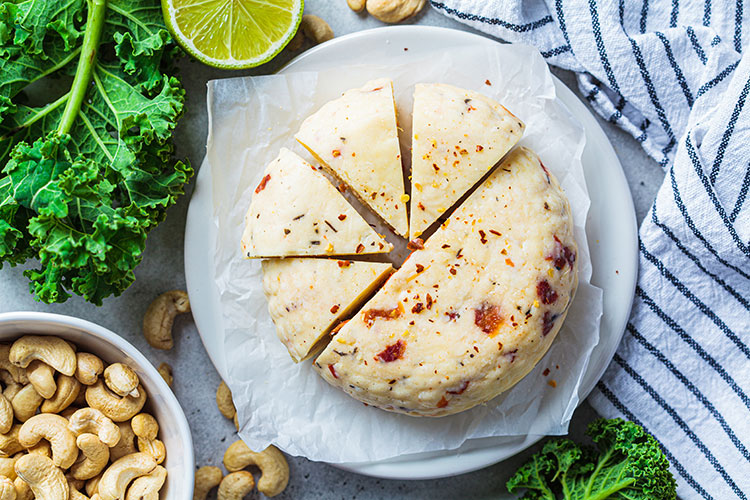
Cheese alternatives are the next frontier in the dairy-free world. Today, there are several types of products which present their own set of challenges such as instability and texture. Citri-Fi® citrus fiber’s water holding and emulsification properties bind the oil and water to create high quality cheese analogs that simulate their animal-based counterparts.

Through the years, cheese producers convinced the market that cheese is the magic ingredient that makes food taste great! Commercials encouraged parents to melt it on vegetables to make it more palatable for their children. Pizza is not pizza unless there is a long stretch of mozzarella hanging off the slice. And when snacking hit its peak, cheese stood on a pedestal due to its protein content and dairy health benefits. Because of this, dairy-based cheese literally milked the market. The popularity created an opportunity for new offerings such as cheese alternatives.

At the same time, the dairy alternative demand began to tick up. Growing concerns about sustainability, animal welfare and health consequences of animal-based fats spurred a sudden interest in creating cheese without animal milk. As a result, today, there are a variety of cheese analogs using different types of food ingredients and processing technologies. And there is no better time to discuss this topic rather than now in January aka Veganuary.

Starch and Fat-based Cheese Alternatives

Many companies try to mimic common cheese types including sliced cheeses for sandwiches and vegan burgers, soft cheese like camembert, or even products that match fresh or cream cheese. To do this, producers have different options. For instance, a lower cost route incorporates a fat source and modified starches. Spreadable types use liquid fats. On the other hand, hard cheeses require solid fats like palm or coconut in combination with starches. However, palm and coconut are questionable when it comes to sustainability. As a result, some shy away and resort to using sunflower or canola oil.

One challenge using these types of fats and modified starches is creating a stable emulsion without chemical emulsifiers. Because clean labeling is another important requirement, manufacturers look for alternative ingredients. Another underlying issue is that these type of cheeses have no nutritional value. Their bases are made up of starch and contain minimal protein versus animal-based cheeses.

Citri-Fi citrus fiber can help bind the oil and water in these type of formulations. The high surface area and native intact pectin content enables emulsification properties. As a result, cheese texture and stability are not compromised. Also, Citri-Fi contributes some dietary fiber, so this helps improve the nutritional content.

Fermented Nut Cheeses

Another type of cheese that is popular is fermented nut cheeses. These cheeses typically use almond or cashew as a base. The nutritional profile is better due to the nut protein content. And the flavor profile simulates the natural flavor of cheese which can come close to aged cheese. However, this process comes with more costs and tends to be pricier. And when nuts are ground, they tend to not bind all the fat inside which causes separation.

Because Citri-Fi is a great natural emulsifier, it can bind oil and water to help reduce the costs and improve the yields of these products. Water migration is common in products that do not have a good emulsifying system. As a result, Citri-Fi helps prevent weeping during refrigeration. In the end, Citri-Fi, at low usage levels (0.1% to 0.6%), provides emulsification, stability and nutritional benefits to a variety of cheese alternatives. This can range from cream cheese substitutes, parmesan alternatives to other vegan cheese analogs.

This cheese alternative market is the new frontier in the dairy-free world. In the future, cheese will use different protein sources like chickpeas and fava beans. Producers will push the envelope using fermentation, new processes and new ingredients to create high quality cheeses matching their animal-based counterparts.

Citri-Fi is non-GMO Project certified, non-allergenic and gluten-free. This natural ingredient has no E-number. Labeling options include citrus fiber, dried citrus pulp or citrus flour which resonate well in the natural and clean label markets.

Please contact us for more information.

Read more →

Fresh Pet Food & Treats: Citri-Fi Citrus Fiber Provides Emulsification, Syneresis Control, Increased Yields, Reduced Breakage and Mold Release 394x294

Fresh Pet Food: Prevent Water Separation using Citrus Fiber

Fresh pet foods emerged due to the pet humanization trend which continues to shape the pet specialty food segment today. However, several issues including water separation tend to create sub-par products. At the same time, consumers are weary of stabilizers and binders on labeling. There are natural solutions available including Citri-Fi® citrus fiber which binds the water during handling and storage while maintaining a clean label and superior texture.

Pet parents rearing furry babies continue to drive many of the pet humanization trends today especially in pet food and treats. With this in mind, pet humanization is a phenomena where pet owners treat their pets like children. These consumers purchase items that resemble products they purchase for themselves. For instance, pet owners tend to read food labels, select minimally processed foods and veer towards healthier versions. Due to this trend, fresh pet foods continue to thrive within the specialty pet food segment.

Fresh pet foods attract pet parents by their short ingredient lists, fresh raw materials and healthier positioning. For example, many pet parents believe that ‘real food’ should be stored in the same place as human food - the refrigerator. However, creating tasty fresh pet food comes with its own set of challenges. For instance, food preparation and storage affect the quality.

The Challenges when Making Fresh Pet Foods

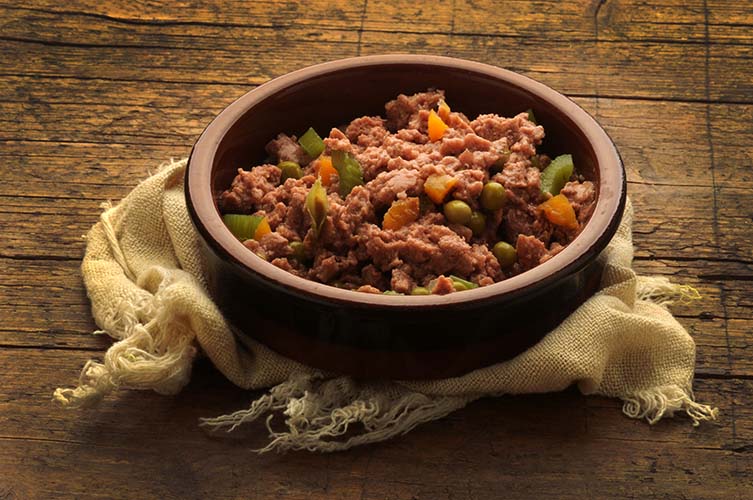
Some fresh pet foods come pre-cooked and frozen in meal blocks. This improves food safety and minimizes the handling of raw foods. Companies ship the frozen meal blocks to consumers since many use an eCommerce model. Or some companies sell the food in freezer cases at brick-and-mortar stores. During preparation, the consumer needs to slack the frozen meal for several hours before serving. Depending on the food components, water separation is a common issue. For example, many fresh dog foods incorporate vegetables like carrots and peas in the meat matrix. Water tends to leech out during the slacking process creating a pool within the packaging.

Other companies pre-cook and package the fresh food mass into chubs. Retailers sell the chubs in refrigerator cases. Again, depending on the formulation, water migration is inevitable. The product weeps water which does not meet consumers’ expectations when feeding Fido.

Natural Solutions to Improve Refrigerated Pet Food

Though many consumers steer away from stabilizers and binders, some clean options which help bind water exist in the market. One ideal solution includes using Citri-Fi® citrus fiber. This natural ingredient is created from byproduct of the citrus juicing process. However, the key benefit of using Citri-Fi is its dual functionality. It not only binds water but also oil or fat that leech out of a food product during cooking, handling and storage.

At very low usage levels, 0.2%-1.0%, this citrus fiber locks in the water. And yet, not all citrus fibers are created the same. Citri-Fi uses a process that is free from chemical modifications that opens up the fiber. This process preserves the citrus fiber’s holistic composition so that it retains a high level of native pectin. Both the high surface area and the native pectin lock in the water. As a result, consumers prep fresh pet food without the watery mess. Other citrus fibers on the market provide limited water holding due to their processing. On the other hand, Citri-Fi, an upcycled ingredient tells a sustainable story from farm to pet bowl.

Citri-Fi citrus fiber is AAFCO approved. Labeling options include citrus fiber, dried citrus pulp or citrus flour. This natural ingredient is non-GMO Project certified, allergen-free, gluten-free, grain-free and made in the U.S.A.

The Future of Pet Foods

Other human trends crossing over into the pet food and treat category include plant-based foods. Because of this, the sky is the limit when creating new types of fresh pet foods as long as it is AAFCO approved.  Since plant-based foods like vegetables and fruits tend to release water during storage, Citri-Fi can bind the water to create higher quality, natural pet food products.

For more information, please contacts us to order a sample.

Read more →