Clean Grilling Solutions: Natural Cookery
The art of grilling foods has evolved over time with new cooking technologies and alternative food formats like seafood, veggies and fruits. Regardless, consumers are demanding clean label grilling options which have dry rub, marinade, basting paste and savory sauce formulators are scrambling. Citri-Fi® citrus fiber’s high water holding and emulsification properties makes this an ideal natural solution.
Grilling foods has been the hallmark of cooking since cave dwellers walked the Earth. The use of fire continues today but with handling food with a skewer versus a human arm. We now have access to smokers and grills. At the same time, this category continues to evolve and innovate. Now, there are new grilling methods and fancy equipment like high-performance drum smokers and flat-top grills. In addition to traditional animal meats, foodies grill a variety of foodstuff. Other grilling mains now include seafood, vegetables, plant-based protein (e.g. tofu, tempeh) and fruits such as pineapple and peaches. However, new BBQing ways creates new challenges which call for clean label grilling solutions.
Common Grilling Issues: Heat, Time & Sauce Formulations
Gary Larson illustrated in one of his popular cartoons several cavemen holding their meat with their bare hands and plunging their entire forearms deep into the roaring flames. Those were challenges of the past. Today, we have new trials and tribulations. No one is torching their arm hair to roast up dinner. Instead, grilling foodies are faced with other dilemmas including burning, fading color, excessive caramelization and off-flavors. Grilling is a harsh cooking process which requires clean label grilling technology.
However, the searing flame is not the only culprit when cooking food. Dry rubs, marinades and sauces, which accompany grilled foods, tend to come with their own issues. For instance, dry rubs can clump up. Marinades and culinary sauces may need additional thickeners to counter thin viscosity. And some grilling topicals need more heat stability to retain the flavorful experience. At the same time, consumers expect clean label grilling options. Because of the anti-ultra-processed foods movement, fellow grillers are concerned.
Drum Smokers: Pushes the Limit of Savory Spice Formulations
Drum smokers are the newest addition to the grilling appliance family. Their ability to convert a flavorless slab of meat into a morsel exploding with flavors that complement smoke is a grillers dream come true. However, smoking foods requires time and patience. Typically savory seasoning formulations fade during these 12-hour low and slow cook processes. As a result, grillers are sniffing out clean grilling ingredients that can endure the prolonged smoker exposure.
One option is Citri-Fi citrus fiber. Due to this citrus fiber’s high surface area, this clean label grilling ingredient can be used to dry plate liquid smoke turning it into a free-flowing powder. This flow-able powder can then be mixed with other dry spices to create a natural spice rub. Many dry rubs tend to suffer hygroscopic clumping. However, citrus fiber minimizes clumping as a result preserves its flow-ability. When applied to grilling foods, the moisture from the foodstuff may provide enough available water to hydrate the Citri-Fi to create a protective film during the smoking process. Other options include mixing the citrus fiber alone in the spice mix and applying to the food before smoking. Or citrus fiber can be mixed together with spices to make a thick basting paste which then can be rubbed on the meats prior to the heat step.
Flat-top Grilling Vaporizes the Savory
Another popular grilling apparatus is the flat grill. Besides cooking up homemade tortillas, the flat grill introduced consumers to a new cooking experience without the open flame. Flat grills still emit high heat which puts any foodstuff at risk. For instance, sauces used on thin protein substrates like shaved meats or smash burgers tend to vaporize or burn quickly on solid steel surfaces. To counter the flash off, manufacturers developed clean label grilling sauces with high cling rates. This allowed the sauce to stick to the food during the grilling process without it falling or flashing off. The Citri-Fi 200 and 300 series are both great citrus fiber lines which improve the cling and adhesion at low usage levels (<1%). Another challenge with flat top grills involves using dry rubs. Again, savory dry rubs tend to clump up during the cooking process. Using Citri-Fi citrus fiber may minimize the clumping during the grilling time allowing for a more uniform coating.
Citri-Fi citrus fiber can be used a in variety of grilling rubs, pastes and sauces to improve the texture, viscosity and stability. To learn more about these type of applications using this upcycled citrus fiber, check out: Meat Marinades Bathing Foods with Flavor.
Other Grilling Trends Firing up Consumers
The consumer market is demanding clean label grilling ingredients with no MSG, low sugar and low sodium. Less processed foods mean short ingredient lists using natural sounding ingredients. These demands apply to all grilling foodstuffs including dry rubs, marinades, basting sauces and finishing glazes.
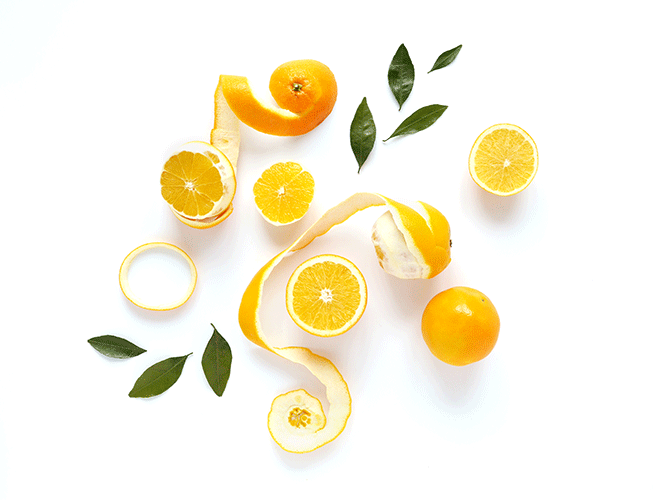
Citri-Fi citrus fiber is an ideal clean grilling solution due to its labeling options which include citrus fiber, dried citrus pulp or citrus flour. They all resonate as natural to help products look minimally processed. Citri-Fi is non-GMO, has no MSG and contributes dietary fiber to the nutritional label. Now, certified organic citrus fiber is available – Citri-Fi 400 series.
For more information, contact us.